

Audio
Youtube
Psalm 91 begins with one of Scripture’s great pictures of security: “He who dwells in the secret place of the Most High shall abide under the shadow of the Almighty.” Then the Psalm becomes personal: “My refuge and my fortress; My God, in Him I will trust.” Trusting God is more than agreeing that He exists or saying the right words when life is going well. Biblical trust grows as we know Him, dwell with Him and learn His character through His Word. It is often when the darker days arrive that the depth of that trust becomes visible.
Job gives us a confronting example. In a single terrible sequence, news came of lost possessions, dead servants and finally the death of his children. Job grieved deeply. Scripture does not present him as untouched by suffering, yet in the midst of his grief he fell to the ground and worshipped. His circumstances had changed completely, but the God he worshipped had not. Trust does not require us to pretend that pain is painless. It means that even when we cannot understand what God is doing, we continue to pray, obey and hold to what we know of His character.
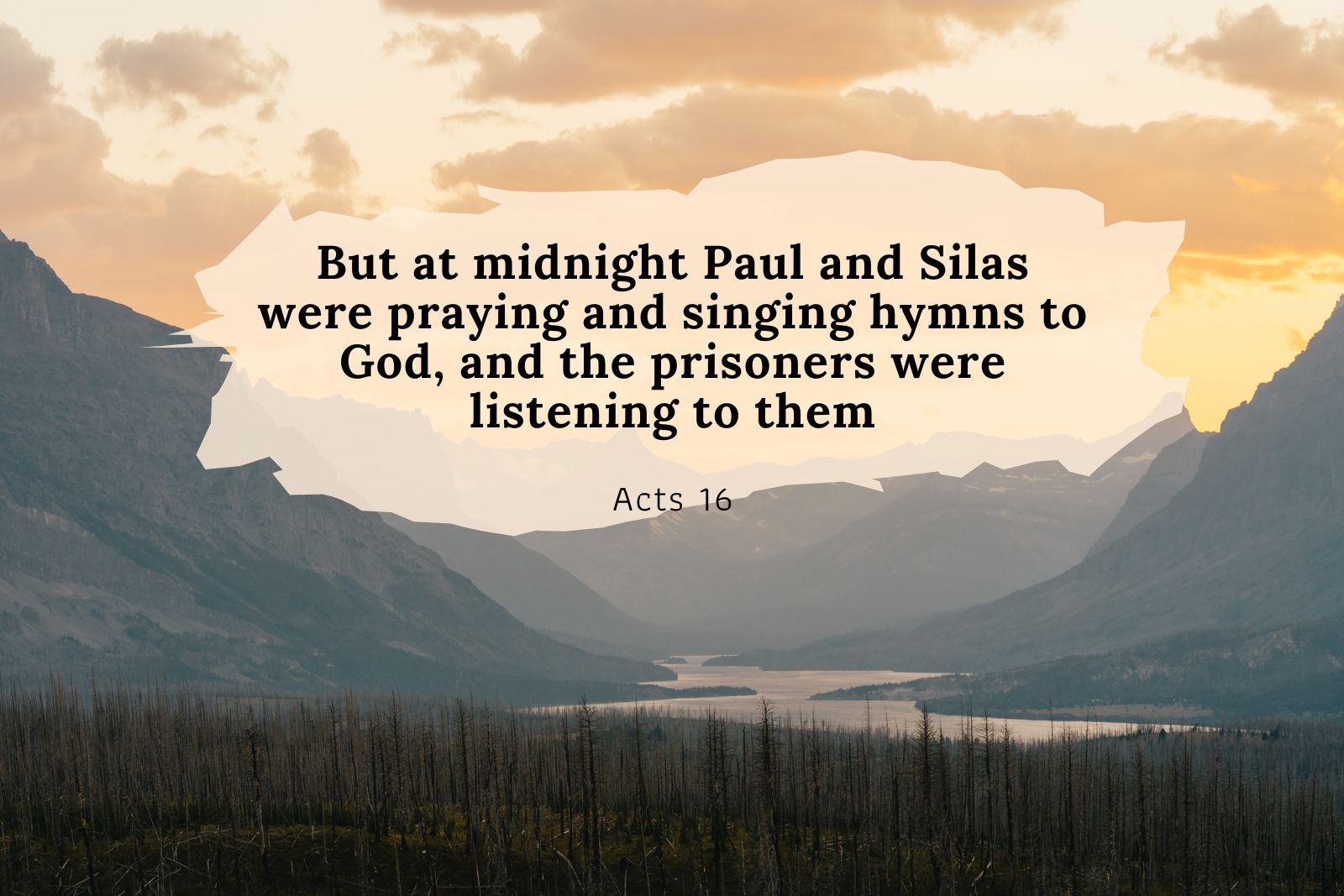
Acts 16 gives us another picture. Paul and Silas had been beaten and imprisoned for faithfully preaching Christ, yet at midnight they were praying and singing hymns to God while the other prisoners listened. Their praise came before their circumstances changed. The prison became a place of worship because their confidence was not ultimately in the cell, the authorities or even the outcome. Their trust rested in God. Historical testimonies such as those of Corrie ten Boom and Horatio Spafford remind us of the same truth: faith is tested when suffering becomes personal, and our response in those moments reveals where our security truly lies.
That is why trust must be cultivated before midnight comes. We learn to dwell with God through prayer, worship, Scripture and ongoing fellowship with Him. Psalm 91 names Him as the Most High, the Almighty, the covenant-keeping LORD and our God. The more clearly we know who He is, the more deeply we learn to trust Him. Biblical trust is therefore visible. It endures through suffering, praises through pain and continues to delight in God’s promises. Our circumstances may change suddenly, but the Lord does not. As we build our lives upon His Word, we can increasingly say with confidence, even in the darkest places: He is my refuge and my fortress; my God, in Him I will trust.
Trusting God is not merely something we say. It becomes visible in the way we respond when life becomes difficult.
The message develops three marks of genuine trust:
-
- Those who trust God endure through suffering.
- Those who trust God continue to pray and praise in the darkness.
- Those who trust God dwell in His presence and delight in His Word.
The foundation beneath all three is knowing God’s character. The more deeply we know Him through Scripture and relationship with Him, the stronger our confidence becomes when circumstances give us every reason to fear.
Take some time this week to read Psalm 91 slowly rather than simply reading through it. Ask what the names and descriptions of God reveal about His character, and consider where your own security rests when life becomes uncertain. Build the habit of prayer, worship and Scripture now, so that when midnight comes, your heart already knows where to turn.