

Audio
Youtube
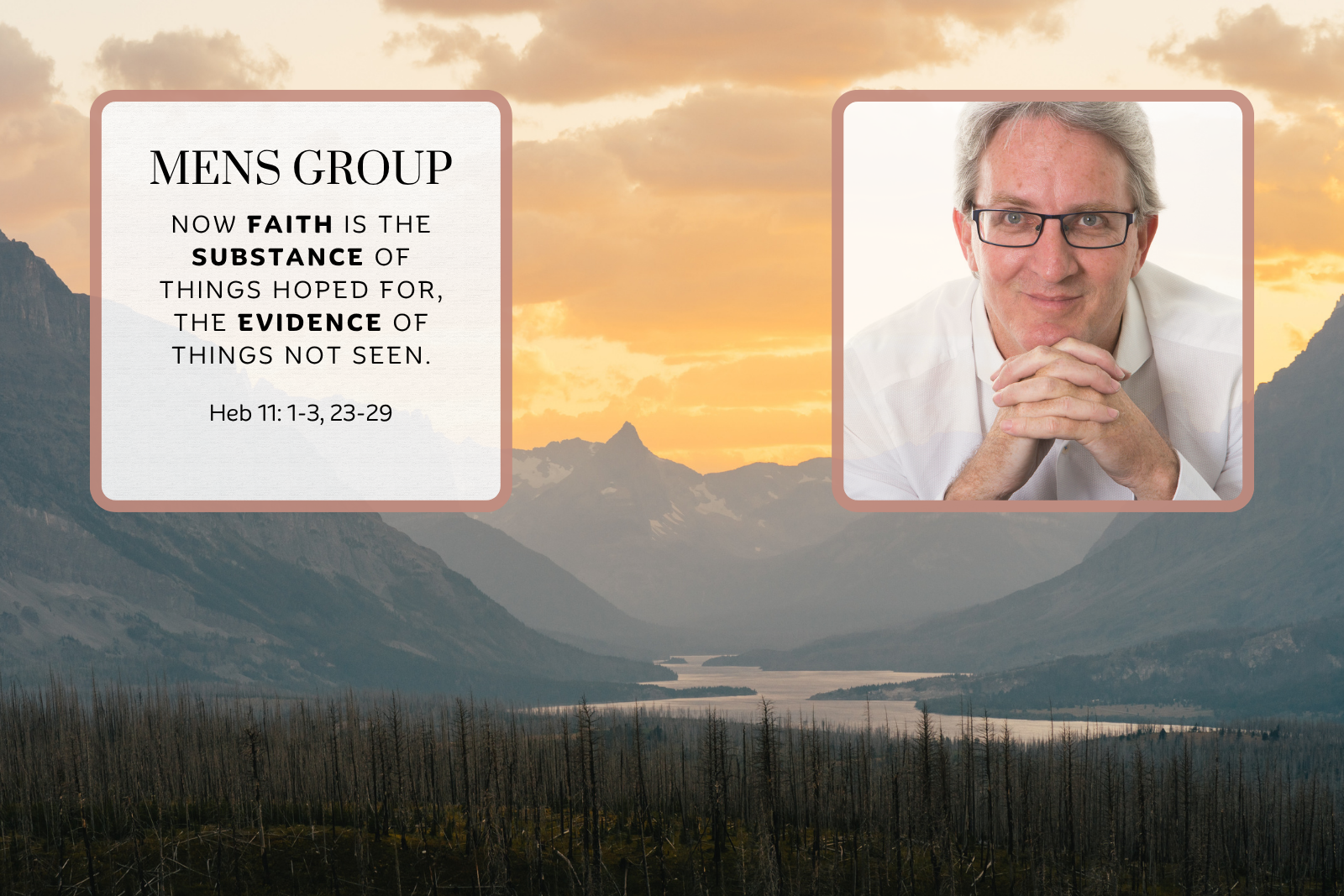
Hebrews 11 begins with the familiar declaration that faith is “the substance of things hoped for, the evidence of things not seen”. Biblical faith is not pretending that something is true simply because we want it to be. It is a settled confidence in God and His promises, even while their complete fulfilment remains unseen. Romans 8 speaks of hope in the same way, while 2 Corinthians reminds believers that what we can presently see is temporary, but what we cannot see is eternal. That is why Paul can say, “We walk by faith, not by sight.” Faith changes where we fix our attention. Instead of allowing the visible circumstances of this temporary life to define everything, we learn to trust the eternal God who has spoken.
Hebrews then tells us that “without faith it is impossible to please Him”. The message contrasts that with Israel in the wilderness, where Psalm 78 records a repeated pattern of complaining, doubting and testing God despite everything He had already done. They had seen deliverance, provision and miracles, yet still struggled to trust Him when the next difficulty appeared. That is uncomfortably familiar territory for most of us. We may admire the great men and women of Hebrews 11, but our own lives often resemble Israel more closely – moments of faith followed by fear, gratitude followed by complaint, trust followed by another struggle. The encouragement is not to imagine ourselves as biblical heroes, but to learn from their faithfulness while remembering our own weakness and continually returning to God.
Moses gives us one of the clearest examples. His parents acted by faith when Pharaoh commanded the death of the Hebrew sons. Moses later chose “rather to suffer affliction with the people of God than to enjoy the passing pleasures of sin”, considering identification with God’s people of greater value than the treasures of Egypt. Hebrews says that he endured “as seeing Him who is invisible”. That is the heart of faith. Moses could see the power, wealth and security of Egypt with his physical eyes, but faith allowed him to value something greater. He kept the Passover, trusted God through the Red Sea, and continued to follow the Lord because the unseen reality of God mattered more than the visible attractions or threats surrounding him.
That brings the teaching back to our own journey towards Christlikeness. Faith is not something for an elite group of Christians who somehow possess greater spiritual ability than everyone else. Scripture says that faith comes by hearing the Word of God, and believers are encouraged to build themselves up in faith through prayer. We remain frail people who still need repentance, grace and the work of the Holy Spirit within us. Yet we can ask God to deepen our faith, deliberately fill our minds with His Word and then act upon what He has said. Do not boast in how strong your faith appears. Look instead towards Christ, remember where your strength comes from, and take the next faithful step. We walk by faith, not by sight, learning increasingly to see Him who is invisible.
The message develops five connected truths:
1. Faith concerns what is not yet seen – Hebrews 11:1
Christian faith looks beyond temporary circumstances towards the eternal realities and promises of God.
2. Without faith it is impossible to please God – Hebrews 11:6
Faith begins with believing that God is and trusting His character enough to seek Him.
3. Israel warns us how easily faith can fluctuate – Psalm 78
The wilderness generation repeatedly saw God act, only to doubt Him again when new difficulties arose.
4. Moses chose the eternal over the temporary – Hebrews 11:23-29
Egypt offered visible wealth, position and pleasure. Faith enabled Moses to value God and His promises more highly.
5. Faith must continue to grow
The believer’s confidence is not in personal spiritual strength. Faith is nourished through the Word, prayer and dependence upon the Holy Spirit as God forms us increasingly into the likeness of Christ.
The central thought is:
Faith sees beyond what the eyes can see and lives according to the reality of the God who cannot be seen.
A Helpful Contrast in the Message
One of the strongest pastoral observations in this teaching is the contrast between the heroes of Hebrews 11 and the ordinary Israelites who travelled with Moses.
It is easy to mentally place ourselves in the position of Moses, Joshua, Abraham, or David. Yet Scripture also gives us the ordinary people who struggled, complained, doubted, and repeatedly needed God’s mercy.
That is often a more realistic picture of Christian growth.
The goal is not to convince ourselves that we are spiritual heroes. It is to recognise our frailty, learn from those who walked faithfully before us and keep turning back towards Christ when we stumble. Psalm 78 says that God remembered that His people were flesh – “a breath that passes away and does not come again”. That does not excuse unbelief, but it reminds us of His patience and mercy towards people who continually need His help.
Read Hebrews 11:1-6 and 23-29 again, then ask yourself what currently has the greatest influence over your decisions:
What you can see, or what God has said?
Perhaps there is an area where fear, comfort, money, uncertainty or circumstances have become larger in your thinking than the promises of God. Bring that honestly before Him. Spend time in His Word, pray for your faith to grow, and then take the next step of obedience available to you.
Faith does not require us to become Moses overnight. It calls us to trust the same God Moses trusted.