

Audio
Youtube
Luke 6:27 begins with Jesus turning directly towards those who are willing to hear Him: “But I say to you who hear.” What follows is deeply personal. Love your enemies. Do good to those who hate you. Bless those who curse you. Pray for those who spitefully use you. These can feel like impossible demands because they run directly against the natural response of the flesh. When someone hurts us, our first instinct may be to defend ourselves, retaliate or insist that they do not deserve our forgiveness. Yet Jesus is teaching His disciples a different way — one shaped by the character and mercy of God.
Jesus is not asking us to pretend that evil is good or that genuine hurt never happened. Nor is He simply giving us another set of external religious rules to perform. His teaching reaches deeper into the heart. “Just as you want men to do to you, you also do to them likewise.” Loving people who already love us is something almost anyone can do. Doing good when we expect something in return is not particularly remarkable. Kingdom love becomes visible when we choose to love, bless and do good even when there is no obvious earthly reward. Jesus points us towards our Father, “for He is kind to the unthankful and evil.” Then comes the heart of the passage: “Therefore be merciful, just as your Father also is merciful.”
That word mercy changes the way we approach these difficult commands. We show mercy because mercy has first been shown to us. The question is not whether the person who hurt us deserves kindness. If everything depended upon what we deserved, none of us could stand before God. Instead, the first step towards obedience may simply be willingness: “Lord, I know what You have said. Help me to be willing.” From there, obedience may begin very quietly — a prayer instead of a sharp comeback, a blessing instead of another hurtful word, or a deliberate act of good rather than seeking to get even. Sometimes the “enemy” before us is simply the difficult person who continually irritates, criticises or misunderstands us. Christ still calls us to respond in a way that reflects Him.
Jesus then continues the same heart-centred teaching: “Judge not… condemn not… forgive… give.” This does not remove Christian discernment or mean that sin can never be identified. The fuller teaching in Matthew 7 tells us first to deal honestly with the plank in our own eye so that we may then see clearly to help our brother. The warning is against the harsh, self-righteous and condemning spirit that so easily sees the faults of another while overlooking its own. Jesus tells us that the measure we use will be measured back to us. Mercy and forgiveness should therefore increasingly become the believer’s normal posture towards others.
These commands are impossible only when we believe they must be accomplished through our own strength. Jesus does not merely tell His people how they ought to live and then leave them alone to achieve it. Through the Holy Spirit, God changes the heart and supplies what we lack. The real question therefore becomes not merely, “Can I do this?” but “Am I willing to obey Christ?” We can bring even that weakness to Him: “Father, help me to be willing. Fill me with Your mercy and Your love.” As His love works through us, the world begins to see something different — not our strength, not our self-righteousness, but the character of Christ being formed in His people.
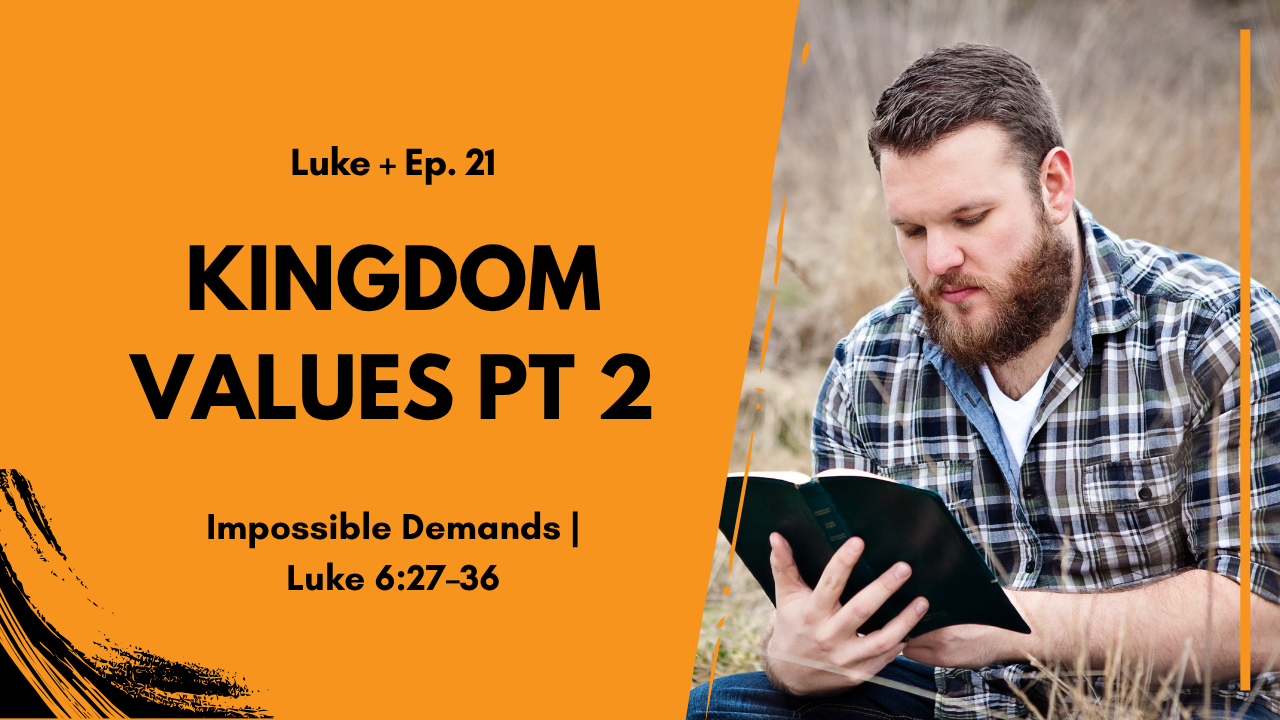
Watch or listen to this study from Luke 6:27–38 as we consider Christ’s call to love our enemies, forgive those who hurt us, choose mercy over condemnation and trust Him with the things that seem impossible in our own strength.
Scriptures Mentioned / Referenced
- Luke 6:27–38 — main passage
- Matthew 5–7 — parallel and expanded teaching in the Sermon on the Mount
- Matthew 5:14–16 — being a light others can see
- Matthew 7:1–5 — judgement, the plank and the speck
- James 1:17 — the Father of lights