
Audio
Youtube
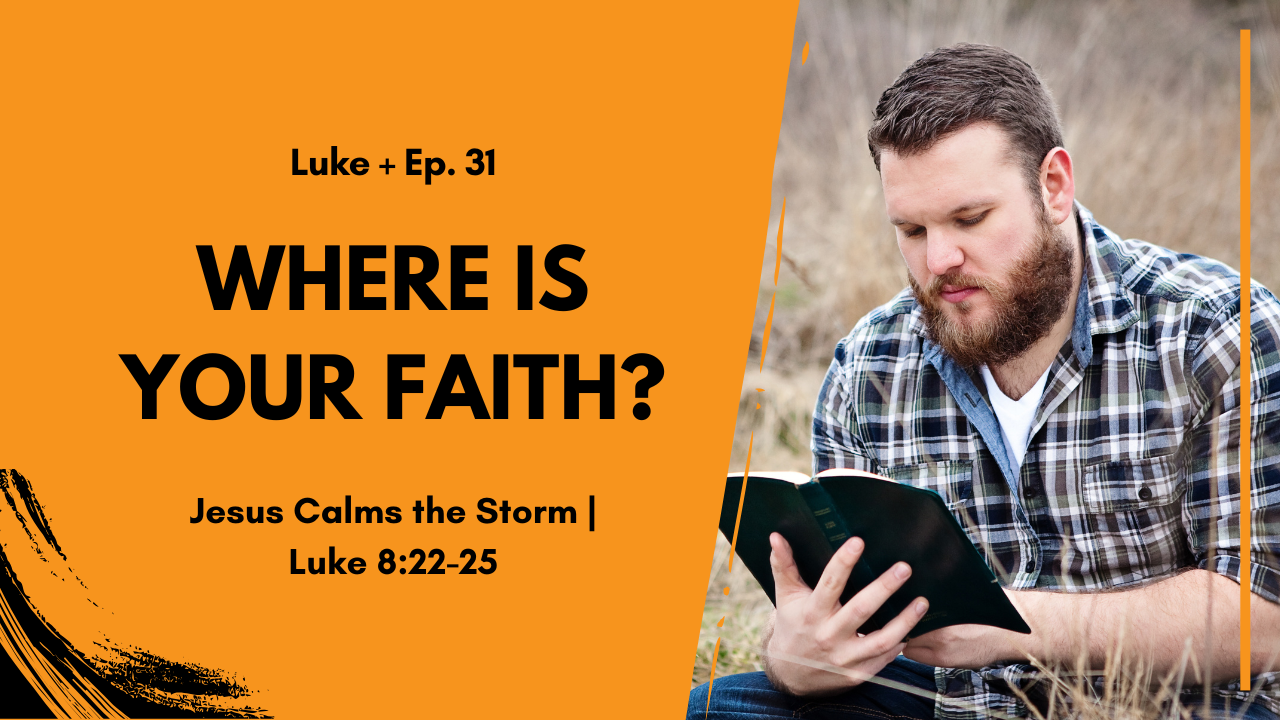
Luke 8:22–25 begins with words that are easy to read past: “Let us cross over to the other side of the lake.” Jesus gets into the boat with His disciples; they launch out, and while they are sailing, He falls asleep. Then a violent windstorm descends upon the lake. Water begins filling the boat, and these experienced fishermen realise they are in genuine danger. They wake Jesus crying, “Master, Master, we are perishing!” Jesus rises, rebukes the wind and the raging water, and immediately there is calm. Then comes the question that reaches beyond the boat and into our own lives: “Where is your faith?”
One of the important lessons here is that storms do not necessarily mean we have stepped outside God’s will. Jonah encountered a storm while running away from what God had told him to do; these disciples encounter one while obeying Jesus. Christ Himself had told them to cross the lake. Sometimes hardship is corrective, and Scripture certainly teaches that God uses trials to mature His children. But sometimes storms simply come. Following Christ does not mean that nothing difficult will ever happen. Biblical faith is not the promise of a trouble-free life; it is confidence in the Lord when trouble arrives.
And this is where Jesus’ opening words matter so much: “Let us cross over to the other side.” He did not say, “Let us see whether we make it.” The disciples saw the wind, the waves and the water entering the boat, and for a moment their circumstances seemed more certain than the word Christ had already given them. We can do the same thing. Fear makes the storm appear enormous and the promises of God appear distant. Yet Jesus was still in complete control. Even His sleep shows us something of His genuine humanity, while His authority over the wind and sea reveals something far greater. Psalm 89 declares that it is the Lord who rules the raging sea and stills its waves. Here, Jesus stands and does exactly that.
There is another change of perspective that I find particularly helpful. We sometimes talk as though Jesus has joined us in our boat — as though this is our life, our journey and our plan, and Christ has come along to help us get through it. But the gospel turns that picture around. We are in His boat. He is the One who called us. Salvation begins with what Christ has done for us, not with what we have done for Him. While we were still sinners, Christ died for us, and at the cross He declared, “It is finished.” He calls us to follow Him into eternal life. The Christian life is therefore not primarily about asking Jesus to fit into our plans, but about trusting the One who has graciously called us into His.
So when the storm comes, prayer need not be complicated. Sometimes the most honest prayer is simply, “Lord, help.” But we should also remember who is leading the journey. Christ has not disappeared simply because circumstances are frightening. We can speak with Him, remain in His Word, learn from Him and trust Him day by day. The disciples asked, “Who can this be? For He commands even the winds and water, and they obey Him!” That is ultimately where our faith rests — not in our ability to control the storm, but in the identity and authority of the One who is with us. The question remains: Where is your faith?
Watch or listen to this study on Luke 8:22–25 as we consider what Jesus’ words, “Let us cross over to the other side,” mean for us, why storms do not necessarily mean we have failed, and what it means to trust Christ when fear tells us everything is falling apart.
Scriptures Mentioned / Referenced
- Luke 8:22–25 — main passage
- Mark 4:35–41 — parallel account of Jesus calming the storm
- Jonah 1 — Jonah’s storm while fleeing from God’s command
- James 1:2–4 — trials producing patience and maturity
- Romans 5:8 — Christ dying for us while we were still sinners
- John 19:30 — “It is finished”
- Psalm 89:8–9 — the Lord ruling and stilling the raging sea