
Audio
Youtube
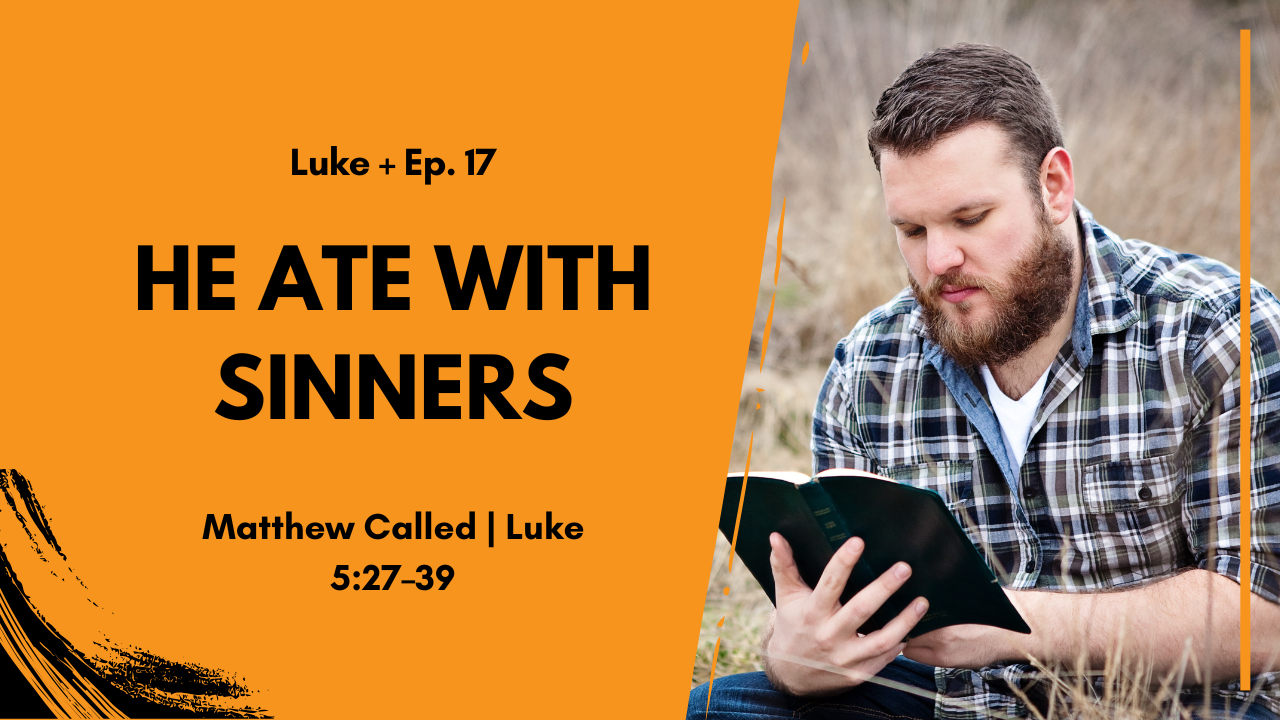
Luke 5:27–39 begins immediately after the healing of the paralysed man in Capernaum. Jesus has just demonstrated both His authority to heal and His authority to forgive sins, and word about Him is spreading. Then He sees a tax collector named Levi sitting at the tax office and gives him one simple command: “Follow Me.” Levi — whom we know as Matthew, one of the twelve apostles and the writer of Matthew’s Gospel — gets up, leaves everything and follows Jesus. For the people watching, this would have been remarkable. Tax collectors carried a terrible reputation. They were regarded as dishonest, untrustworthy and socially outcast. Yet Jesus looks at this man and calls him to become His disciple.
Matthew’s response is beautiful. He holds a great feast in his house, and a large number of other tax collectors and people gather there with Jesus. It is almost as though the first thing Matthew wants to do after encountering Christ is introduce his friends to Him. But the scribes and Pharisees are offended: “Why do You eat and drink with tax collectors and sinners?” Jesus answers with words that reveal the very reason He came: “Those who are well have no need of a physician, but those who are sick. I have not come to call the righteous, but sinners, to repentance.” Jesus does not pretend their sin does not matter. Quite the opposite — He calls them to repentance. But neither does He remain at a safe religious distance from the people who need Him.
There is an important warning here for us as Christians. Scripture calls us to holiness, but holiness must never become spiritual pride that looks down upon those who are still lost or those who are young and immature in their faith. Paul reminds the Corinthian church that the unrighteous will not inherit the kingdom of God, but then adds those wonderful words: “And such were some of you.” They had been washed, sanctified and justified in the name of the Lord Jesus and by the Spirit of God. That should keep us humble. We do not excuse sin, but neither do we forget the grace that was shown to us. We should be close enough to people that they can see something of Christ’s grace, hear His truth, and be called towards the repentance and new life that He offers.
The questioning then moves from who Jesus eats with to why His disciples do not fast like the disciples of John and the Pharisees. Jesus answers using the picture of a wedding feast. How can the friends of the bridegroom fast while the bridegroom is with them? A wedding was a time of celebration, not mourning. The days would come when the Bridegroom was taken away and then His disciples would fast. Jesus is not dismissing fasting — He is putting it in its proper place. Fasting would remain a genuine spiritual discipline, but the presence of Christ among His disciples was a reason for rejoicing.
Jesus then gives the pictures of a new patch on an old garment and new wine being placed into old wineskins. The point of the teaching is much greater than fabric or wine. Jesus did not come merely to patch up the old religious system. What He was bringing could not simply be added as another layer of outward religion. He came to bring the fulfilment of God’s saving purpose — a new covenant work reaching into the heart, accomplished through the perfect sacrifice of Christ Himself. John tells us that the Word became flesh and dwelt among us, and 1 John reminds us that He was manifested to take away our sins. This is where the whole passage leads us. Christ calls sinners, He calls them to repentance, and by His grace He does not leave them as He found them